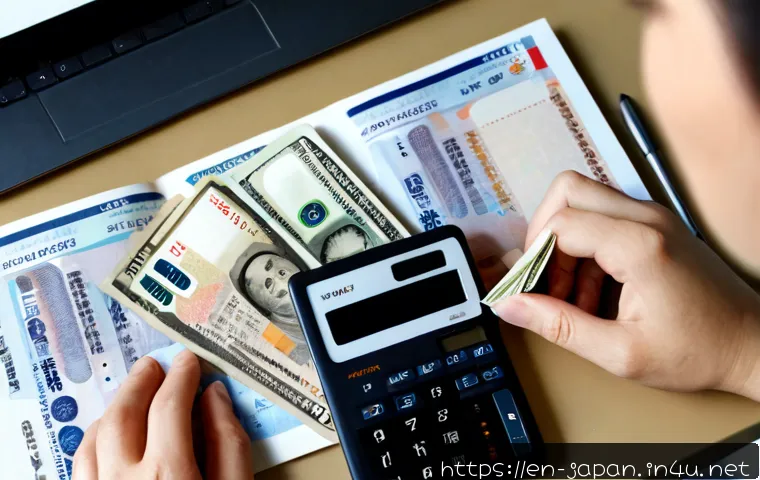
To estimate a Japanese yen price in your home currency, divide the yen amount by the number of yen you receive for one unit of your currency. For a yen budget, multiply your home-currency budget by the current exchange rate.
Your final cost can be higher than the displayed market rate because card issuers, ATMs, and exchange providers may add fees or a rate margin. For many travelers, a mix of a travel card and a modest cash reserve is more flexible than relying on only one payment method.
The best setup depends on your card’s foreign transaction fee, likely ATM charges, your itinerary, and how often you expect to use smaller local businesses.
Compare the effective exchange rate and total fees before departure rather than choosing only by convenience.
At a Glance
- Convert a yen price by dividing it by the yen-per-home-currency exchange rate.
- Compare the market rate with foreign transaction fees, ATM fees, fixed charges, and provider rate margins.
- Carry some yen for flexibility, especially when visiting smaller businesses, local transport locations, or rural areas.
| Payment option | What to compare | When it may be useful | Key point to check |
|---|---|---|---|
| Travel credit card | Exchange rate, foreign transaction fee, card network acceptance | Larger purchases where cards are accepted | Whether the card charges a foreign transaction fee |
| Debit-card ATM withdrawal | Bank fee, ATM operator fee, withdrawal limit, exchange rate | Getting yen during the trip | Which ATMs accept your card and what fees apply |
| Airport currency exchange | Quoted rate and provider margin | Immediate arrival cash needs | Total yen received for the amount exchanged |
| City exchange counter | Rate comparison, service fee, convenience | Travelers who prefer arranging cash in person | Whether the displayed rate includes all charges |
Convert Japanese Yen Before You Travel: The Fast Answer
The simple rule is this: divide a yen price by the number of yen you receive for one unit of your home currency. This lets you translate menu prices, hotel costs, rail fares, and shopping totals into a familiar budget figure. The rate you see while planning is only an estimate, however, because exchange rates can move throughout the day.
Use the Right Formula: Yen Price Divided by Yen-Per-Home-Currency Rate
If one unit of your home currency buys a stated number of yen, use that number as the divisor. For example, take the yen price of an item and divide it by the yen-per-home-currency rate. The result is an estimated cost in your home currency.
For the reverse calculation, use multiplication. If you have a home-currency travel budget and want to know how much it may represent in yen, multiply the budget by the current exchange rate. Keeping the two directions separate prevents one of the most common travel-budget errors: multiplying when you should divide.
A Quick Example for Meals, Hotels, and Train Fares
You can build a quick planning list with separate yen amounts for a meal, a hotel night, a rail journey, and a shopping purchase. Divide each yen amount by the same planning rate, then add the converted results. This approach is clearer than converting one large total because it shows where your spending is likely to go.
Use the same method for an itinerary estimate: accommodation first, then food, local transport, attractions, and shopping. If a high-value hotel or shopping purchase matters to your budget, keep that item separate instead of rounding it away.
Why the Displayed Market Rate Is Not Always Your Final Cost
A market exchange rate is a useful reference, not a promise of your final cost. A card issuer, ATM operator, or currency exchange provider may add a rate margin, a fixed fee, a percentage fee, or more than one of these. Compare what you will actually pay or receive, not only the rate shown in an advertisement or currency calculator.
Build a Japan Budget With a Simple Yen Conversion Sheet
A practical Japan budget starts with categories rather than a single daily figure. Write projected costs in yen, convert them using one planning rate, and then leave room for rate movement and payment fees. This makes your budget easier to revise when your itinerary changes.
Estimate Accommodation, Food, Local Transport, Attractions, and Shopping Separately
Separate categories make it easier to see which costs are likely to be paid by card and which may require cash. A hotel may accept a card, while a smaller business, local transport situation, or rural stop may be more convenient with yen. Card acceptance can vary by merchant, location, and payment network, so treat each category as a planning guide rather than a guarantee.
Add a Buffer for Exchange-Rate Movement and Payment Fees
Because rates move and payment providers may charge fees, avoid treating a planning conversion as an exact final bill. Add a personal buffer that fits your comfort level, then review your travel credit card terms and debit-card ATM policy. The important point is not picking one universal buffer, but recognizing that rate movement and transaction costs are separate risks.
Round Estimates Without Losing Track of High-Value Purchases
Rounding can make a budget easier to read, but do not let it hide major costs. Keep accommodation, long-distance travel, and planned shopping purchases visible as individual line items. Smaller everyday items can be grouped if that helps you track the overall yen total.
Compare Cards, ATM Withdrawals, and Currency Exchange Costs
The lowest-looking exchange rate is not always the lowest-cost option. Compare the full payment path: the rate applied, any provider margin, a foreign transaction fee, ATM charges, and fixed withdrawal charges. A convenient method can still be reasonable, but it should be chosen with the total cost in mind.
Compare Rate Margin, Foreign Transaction Fees, and Fixed Withdrawal Charges
A foreign transaction fee may apply when you use a card abroad. ATM withdrawals can involve fees from your own bank, the ATM operator, or both, while exchange counters may build their costs into the rate or add a stated service charge. Check each provider’s current terms because fees, limits, and policies vary.
When a No-Foreign-Transaction-Fee Travel Card May Offer Better Value
A travel credit card with no foreign transaction fee may be worth comparing if you expect to make card purchases in Japan. It can simplify larger payments where your network is accepted. Still, check card acceptance, your issuer’s exchange-rate policy, and whether you have a backup payment option before relying on one card.
When Exchanging Cash May Still Be Practical
Cash can be practical for small purchases, local situations, and areas where card acceptance is less certain. It can also reduce the need to search for an ATM immediately after arrival. Compare airport exchange and city exchange options by looking at the actual yen amount you receive, not just a headline rate.
Why Paying in Yen Is Usually the Clearer Comparison Point
If a terminal or ATM offers to charge you in your home currency instead of yen, that is dynamic currency conversion. It may make the amount feel familiar, but it can include a conversion rate that differs from your card issuer’s rate. Paying in yen gives you a clearer basis for comparing your own card’s terms with the local conversion offer.
Avoid Common Currency Calculation and Payment Mistakes
A few small errors can make a Japan travel budget look much cheaper or more expensive than it really is. Use a consistent formula, preserve the original yen prices in your notes, and avoid accepting conversion prompts without reading them.
Do Not Reverse the Exchange-Rate Formula

For a yen price converted into your home currency, divide by the number of yen per unit of your currency. For a home-currency budget converted into yen, multiply by that rate. Label the rate clearly in your notes so you know which direction you are converting.
Watch for Dynamic Currency Conversion at Terminals and ATMs
Read the screen before confirming a card payment or ATM withdrawal. A prompt that displays your home currency may be offering dynamic currency conversion. Compare it carefully with paying or withdrawing in yen, especially if your card has favorable foreign transaction terms.
Avoid Making a Full-Trip Cash Estimate From One Purchase
One cheap meal or one expensive purchase is not a complete travel budget. Estimate multiple categories and consider your destination type, trip length, and planned activities. This is especially important for travelers combining major cities with smaller towns or rural areas.
Keep an Emergency Payment Backup
ATM availability, withdrawal limits, accepted card networks, and merchant payment methods can vary. Carrying more than one payment option can reduce disruption if a card is not accepted or an ATM does not work with your bank. Store backup cash and cards securely and separately when practical.
Choose a Payment Mix Based on Your Japan Itinerary
There is no single ideal payment method for every Japan trip. A payment mix should reflect where you are going, how long you will stay, and how much flexibility you need for purchases that may be easier in cash.
Major Cities: Cards for Larger Purchases, Cash for Flexibility
In major cities, a card may be useful for larger purchases where it is accepted, while cash can cover smaller or uncertain-payment situations. Before traveling, confirm your card network, foreign transaction fee, and available payment backup.
Rural Areas and Small Shops: Plan for a Larger Cash Reserve
Japan remains a destination where some cash can be useful, particularly in rural areas, at smaller businesses, and in some local transport situations. The appropriate cash reserve depends on your itinerary and spending habits, so plan around the places you expect to visit rather than a fixed rule.
Short Visits Versus Longer Multi-City Trips
For a short trip, arranging enough yen for immediate needs may reduce time spent managing payments. On a longer or multi-city trip, access to ATMs and the ability to use a travel card may become more important. Check withdrawal limits and ATM compatibility before depending on cash withdrawals.
Solo Travelers, Families, and Higher-Spend Shoppers
Solo travelers may prioritize a compact backup plan, while families may want a clearer category budget for shared meals, transport, and accommodation. Higher-spend shoppers should pay particular attention to card acceptance, transaction fees, and the effective rate on large purchases. In every case, retain the original yen receipt or transaction record for comparison.
Choosing Your Payment Setup: Comparison Summary Before Departure
Choose a travel card when its foreign transaction fee, card-network acceptance, and exchange-rate policy fit your expected purchases. Choose ATM withdrawals when you have confirmed likely ATM access, fees, and limits. Choose cash exchange when immediate yen access or cash convenience matters more for your itinerary.
Before departure, check your card acceptance, foreign transaction fee, ATM fee policy, withdrawal limits, available ATM locations, and emergency cash plan. Compare foreign transaction fees before relying on one card. For travel insurance selection, review the official policy details and eligibility conditions rather than assuming payment coverage is included.
Track the effective rate: how much you spent in your home currency compared with the yen value received or paid. This is more useful than judging a provider solely by an advertised exchange rate.
In Closing
Yen budgeting is straightforward once the conversion direction is clear: divide yen prices to estimate home-currency costs, and multiply a home-currency budget to estimate yen. The harder part is accounting for the rate margin and fees attached to the payment method. A card-and-cash mix gives many travelers both flexibility and a backup plan. Review the current terms for your own bank, card, ATM, or exchange provider before making final decisions.
Useful Things to Know
Keep your budget notes in yen as well as your home currency so changing exchange rates do not erase the original price. Save card and ATM transaction records to review the effective rate later. When a terminal offers a home-currency charge, pause and compare it with paying in yen. Small cash reserves can be useful even when you expect to use cards often.
Important Notes
Future exchange rates, specific bank fees, ATM limits, card-network acceptance, and merchant payment policies cannot be assumed in advance. Terms can vary by card, bank, location, time, and provider. Confirm current conditions directly with the relevant card issuer, bank, ATM operator, exchange service, merchant, or travel insurance provider.
Frequently Asked Questions
Q1. What is the easiest way to calculate Japanese yen prices in my currency?
A1. Divide the yen price by the number of yen you receive for one unit of your home currency. Keep the rate labeled clearly so you do not reverse the calculation.
Q2. Is it better to exchange cash before traveling to Japan or withdraw yen from an ATM?
A2. It depends on the exchange rate, provider margin, ATM fees, withdrawal limits, and convenience for your itinerary. Compare the total cost and confirm whether your card will work at the ATMs you expect to use.
Q3. Should I pay in yen or my home currency when a card terminal gives me a choice?
A3. Paying in yen is usually the clearer comparison point because a home-currency option may use dynamic currency conversion. Review the displayed terms and compare them with your card issuer’s foreign transaction policy.